
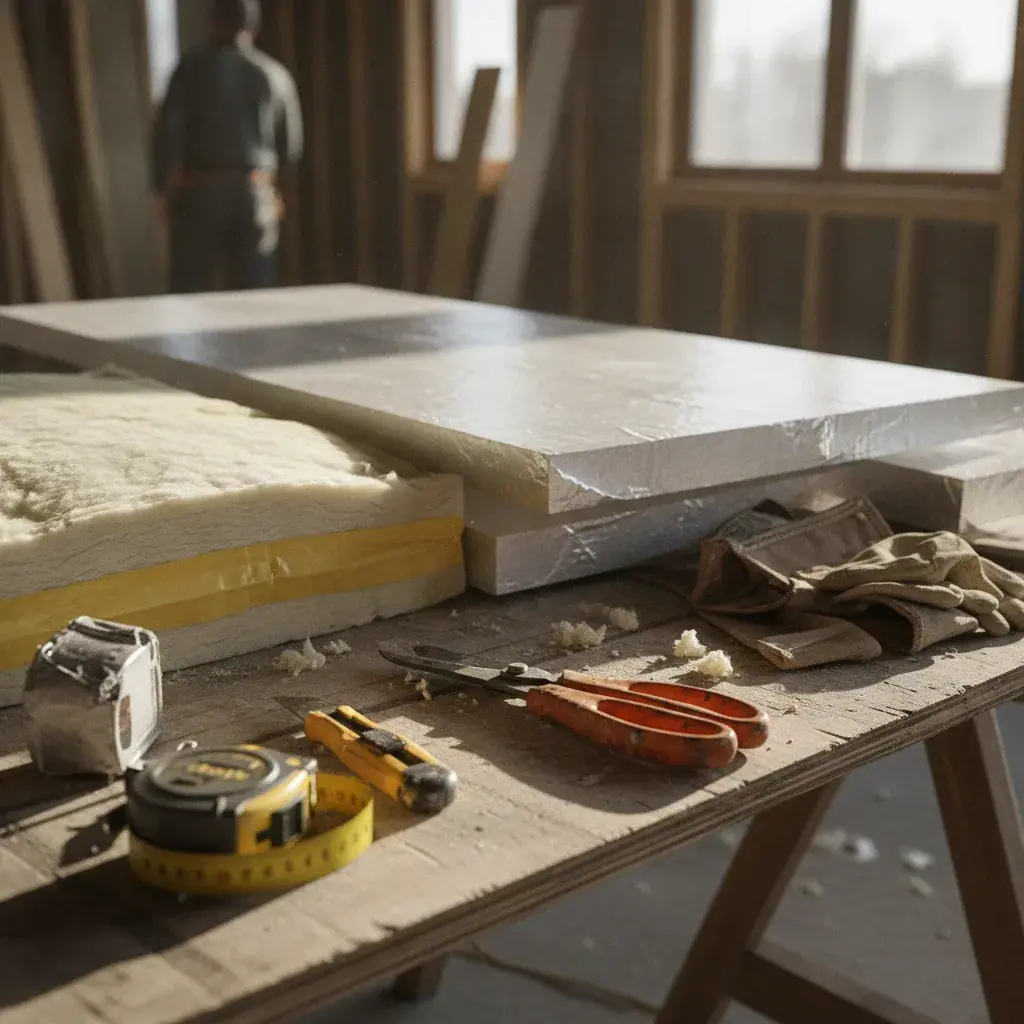
Blown-In Insulation Cost in Montebello, CA
Transparent Blown-In Insulation Cost Pricing for Montebello, CA Homeowners — Free Estimates
Get accurate blown-in insulation costs in Montebello, CA. Armour Montebello Insulation offers free estimates, R-38 installs & utility rebate help. Call (323) 741-5848.
Understanding the true cost of blown-in insulation in Montebello, CA starts with knowing what you’re getting. Blown-in insulation — also called loose-fill insulation — involves blowing small particles of cellulose, fiberglass, or mineral wool into attic spaces, walls, and crawl areas to create a seamless thermal barrier. Unlike batt insulation, blown-in material conforms to irregular spaces, sealing gaps that allow conditioned air to escape.
In Montebello, where summer temperatures in the San Gabriel Valley regularly push past 95°F and older housing stock from the post-World War II building boom dominates neighborhoods like Via Campo and Beverly Boulevard corridors, proper insulation is not optional — it’s essential. Many homes in this 8.3-square-mile city were built between 1945 and 1970 with insulation standards far below today’s California Title 24 energy codes.
Read moreShow less
At Armour Montebello Insulation, we specialize in blown-in insulation installation designed specifically for the building types, climate conditions, and energy requirements of Montebello homeowners. Call us today at (323) 741-5848 for a free estimate.

Understanding Blown-In Insulation Cost in Montebello
Blown-in insulation is one of the most effective and cost-efficient insulation methods available to homeowners in the greater Los Angeles area. The process uses a machine to propel loose insulation material — typically cellulose made from recycled newspaper, fiberglass wool, or mineral wool — into attic floors, wall cavities, and enclosed spaces at high velocity. The material settles and expands to fill every corner, crack, and irregular surface.
The concept of loose-fill insulation dates to the early 20th century, when wood shavings and cork were used to insulate commercial buildings. By the 1950s, mineral wool and fiberglass loose-fill became common in residential construction. Cellulose, the most environmentally friendly option, emerged as a popular blown-in material in the 1970s energy crisis era, when millions of American homeowners scrambled to reduce heating costs. That same era saw many Montebello homes receive their first — and sometimes only — insulation upgrades.
Read moreShow less
Today, blown-in insulation remains highly relevant in Montebello for several reasons. First, the city’s housing stock is predominantly single-family homes built in the 1950s through 1970s — structures with shallow attic cavities, minimal original insulation, and aging materials that have settled, compressed, or degraded over 50–70 years. Second, California’s Title 24 Building Energy Efficiency Standards require a minimum attic insulation R-value of R-38 for climate zone 9, which encompasses Montebello. Most older homes in the city fall well below this threshold, often measuring R-11 or less in attic spaces.
Blown-in insulation is also particularly well-suited to Montebello’s mix of architectural styles, including ranch-style homes, California bungalows, and mid-century modern construction. These building types often have irregular framing, limited attic access, and wall cavities that are difficult to reach with rigid batt insulation. Blown-in material fills these spaces completely without the need for major structural modifications.
For Montebello homeowners considering an energy upgrade, understanding blown-in insulation cost — including material type, depth, square footage, and labor — is the first step toward making an informed investment in their home’s long-term energy performance.
Why Blown-In Insulation Is Needed in Montebello, CA
San Gabriel Valley Heat Extremes
Montebello sits in the western San Gabriel Valley, a region that experiences some of the most intense summer heat in the greater Los Angeles basin. Temperatures regularly exceed 95°F from June through September, and during extreme heat events — such as the September 2020 heat wave that pushed inland temperatures above 110°F across the San Gabriel Valley — poorly insulated attics can reach 150°F or more. At those temperatures, HVAC systems work overtime, driving electricity bills to $300–$500 per month or higher for homes without adequate attic insulation. Blown-in insulation at the proper R-38 depth creates a thermal buffer that reduces attic heat transfer by up to 40%, directly lowering cooling loads.
Aging Housing Stock in Core Neighborhoods
Montebello’s residential core — including neighborhoods along Whittier Boulevard, the Montebello Hills area, and the Via Campo corridor — was developed extensively during the 1950s and 1960s post-war suburban expansion. Homes built in this era typically received 2–3 inches of fiberglass batt insulation in attics, equivalent to R-6 to R-11. Over 60–70 years, this material compresses, sags, and loses 20–40% of its original R-value. Many of these homes have never had insulation upgrades, leaving attic R-values at R-7 or below — far short of the Title 24 requirement of R-38.
Santa Ana Wind Events and Air Sealing Needs
Montebello regularly experiences Santa Ana wind conditions during fall and winter months, with sustained winds of 25–50 mph and gusts exceeding 60 mph recorded in surrounding areas. These dry, high-pressure wind events drive cold outdoor air through attic vents, wall penetrations, and framing gaps, dramatically increasing heating loads. Blown-in cellulose insulation‘s dense-pack application method seals air infiltration pathways that batt insulation leaves open, making it particularly effective at addressing Santa Ana wind infiltration in older Montebello homes.
Crawl Space Moisture from the Rio Hondo Proximity
The western edge of Montebello borders the Rio Hondo river channel, and soils throughout much of the city retain significant groundwater moisture, particularly in lower-elevation neighborhoods near the 60 Freeway corridor. Homes with unencapsulated crawl spaces in these areas experience elevated moisture levels that degrade existing insulation, promote mold growth, and drive humidity into living spaces. Blown-in insulation paired with crawl space encapsulation addresses both thermal performance and moisture-related degradation simultaneously.
California Energy Rebate Incentives
Southern California Gas Company and Southern California Edison both offer rebate programs for qualifying insulation upgrades in homes located in Montebello. Homeowners who upgrade attic insulation to R-38 may qualify for rebates of $0.10–$0.20 per square foot, making the net cost of blown-in insulation significantly lower than the initial estimate. These programs are specific to California utilities and represent a compelling financial incentive for Montebello residents to act now.
Free, no-obligation estimates
Talk to Armour Montebello Insulation
Tell us what you need and we’ll take it from there.
Signs You Need Blown-In Insulation in Montebello
Energy and Comfort Indicators
- Monthly electricity bills exceeding $180–$250 during summer months even with moderate AC use
- Rooms along the south-facing roofline — common in Montebello’s ranch-style homes — that are consistently 5–10°F warmer than the rest of the house
- HVAC system running continuously during summer afternoons without reaching set temperature
- Cold floors in winter months, particularly in homes with uninsulated crawl spaces
Visual and Physical Signs
- Visible gaps or compressed sections in existing attic insulation when viewed through the attic hatch
- Original blown-in material that has settled to less than 5 inches in depth (indicating R-value below R-13)
- Discolored or stained insulation near eave areas, indicating moisture intrusion or air infiltration
- Visible daylight through attic venting that corresponds with cold drafts inside the home
Structural and Age-Related Indicators
- Home built before 1980 with no documented insulation upgrade history
- Recent insulation inspection revealing R-value below R-30 in attic spaces
- Evidence of rodent nesting or pest activity in attic insulation, which destroys R-value and creates health hazards
Urgency Note: If your home shows three or more of these indicators before the June–September Montebello heat season, scheduling an assessment immediately is strongly recommended to avoid peak demand delays and the highest utility bills of the year.
Blown-In Insulation Methods We Use in Montebello
Cellulose Loose-Fill (Attic Floors — Most Common in Montebello)
Blown-in cellulose, made from 85% recycled paper fiber treated with borate-based fire retardant, is the most widely used blown-in material in Montebello residential projects. It achieves R-3.2 to R-3.8 per inch and excels at filling irregular attic floor spaces common in the city’s ranch-style and California bungalow homes. Cellulose’s density also provides superior sound dampening — a benefit for homes near the 60 Freeway or Whittier Boulevard commercial corridor.
Fiberglass Loose-Fill (High-Moisture Areas)
In Montebello homes near the Rio Hondo corridor or those with documented moisture issues, fiberglass loose-fill insulation provides R-2.2 to R-2.7 per inch with superior moisture resistance compared to cellulose. It does not absorb water or support mold growth, making it the preferred choice for attic areas with any history of roof leaks or elevated humidity. explore our attic insulation services
Dense-Pack Cellulose (Closed Wall Cavities)
For insulating existing walls without opening drywall — relevant in Montebello’s many original-condition 1950s and 1960s homes — we use dense-pack cellulose blown through small-diameter holes drilled into wall cavities from the exterior or interior. This method achieves densities of 3.0–3.5 pounds per cubic foot, which effectively stops air movement through wall cavities while achieving R-13 in a standard 2×4 framed wall.
Spray Foam Combined with Blown-In (Air Sealing Plus Thermal Layer)
For maximum energy performance in Montebello homes with significant air infiltration, we combine closed-cell spray foam at the attic floor penetrations and knee walls with a blown-in cellulose or fiberglass thermal layer above. learn more about spray foam insulation This hybrid approach delivers the best air sealing performance alongside the most cost-effective thermal insulation per dollar spent.
Blown-In Insulation Cost in Montebello, CA
Understanding what you’ll actually pay for blown-in insulation in Montebello requires looking at several cost factors specific to this market and this city.
Typical Price Ranges
- Attic blown-in insulation (cellulose or fiberglass, R-38): $1.50–$2.50 per square foot installed, including labor and material. A typical 1,200–1,500 sq ft Montebello ranch home attic costs $1,800–$3,750 total.
- Dense-pack wall insulation: $2.50–$4.00 per square foot of wall surface, including drilling, blowing, and patching. A full exterior wall treatment for a 1,400 sq ft home typically runs $3,500–$6,000.
- Insulation removal before installation: $1.00–$2.00 per square foot, adding $1,200–$3,000 to total project cost depending on depth and contamination level.
- Crawl space blown-in insulation: $2.00–$3.50 per square foot, with the typical Montebello home crawl space ranging from $1,500–$3,500. see crawl space insulation options
Read moreShow less
Montebello-Specific Cost Factors
- Title 24 compliance depth requirements for climate zone 9 mandate R-38 minimum, requiring 13–15 inches of material and increasing material costs versus lower R-value installations
- Older attic access points in pre-1970 Montebello homes often require additional setup time and equipment positioning
- Utility rebates from SoCalGas and SCE can offset $150–$400 of total project cost for qualifying upgrades
Call (323) 741-5848 for a free, no-obligation estimate specific to your Montebello property.
Montebello Neighborhoods We Serve
Montebello Hills
This elevated residential area features larger homes built predominantly in the 1960s and 1970s with complex rooflines and multi-level attic systems. Homes here face intense solar exposure on south and west-facing roofs and often have original fiberglass batt insulation compressed to R-7 or below. Blown-in cellulose top-off or full replacement to R-38 is the most common project type in this neighborhood.
Via Campo Corridor
Dense single-family residential blocks with many 1950s-era California ranch homes built on concrete slab or shallow crawl space foundations. These homes frequently show evidence of original, never-replaced insulation from the Eisenhower era. Dense-pack wall insulation combined with attic blown-in is a common recommendation for this neighborhood’s building vintage.
Whittier Boulevard and Adjacent Residential Streets
Mixed residential and light-commercial zone with a range of building ages from 1940s bungalows to 1980s construction. Homes closer to Whittier Boulevard benefit significantly from cellulose’s sound-dampening properties in addition to its thermal performance, given traffic noise levels on this arterial road.
Near the 60 Freeway Corridor
Residential properties within 500 feet of the Pomona Freeway face elevated noise exposure and particulate air infiltration. Dense-pack blown-in insulation in walls and attic floors provides a meaningful reduction in both sound transmission and outdoor air infiltration in this sub-neighborhood.
Blown-In Insulation Maintenance Tips for Montebello Homeowners
- Inspect attic insulation depth annually, ideally before summer. Use a ruler at three or more points to confirm depth remains at 13–15 inches (R-38). Settling of 1–2 inches per decade is normal in cellulose installations.
- Check for moisture staining around attic penetrations after each significant rainfall or Santa Ana wind event, which can drive moisture through roof gaps.
- Seal new attic penetrations immediately. Any new electrical work, recessed lighting, or plumbing work in Montebello’s older homes creates air sealing breaches that should be foam-sealed before they allow heat infiltration.
- Keep attic vents clear of debris, particularly after fall wind events that deposit leaves and dust into gable and soffit vents common in Montebello’s 1950s–1960s homes.
- Monitor for pest activity. Roof rats and squirrels are active in Montebello residential areas and can damage blown-in insulation rapidly. Signs of nesting or droppings warrant immediate pest control followed by insulation assessment.
- Re-check R-value after any roof repair or replacement. Roofers walking through attic spaces during re-roof projects in Montebello frequently disturb and compress blown-in material unevenly.
- Request a utility energy audit every 5–7 years to confirm insulation performance matches original installation specifications.
Why Choose Armour Montebello Insulation
Armour Montebello Insulation is a locally focused insulation contractor serving homeowners specifically in Montebello and the surrounding western San Gabriel Valley. We understand the specific building vintages, soil conditions, and climate challenges that affect homes in this community — from the post-war ranch homes of Via Campo to the hillside properties in Montebello Hills.
Our technicians are trained to work within California Title 24 requirements for climate zone 9, ensuring every installation we complete meets or exceeds the R-38 attic standard required for Montebello homes. We use high-output blowing equipment calibrated for consistent coverage depth, and we document every installation with depth measurements and photographic records so you have clear evidence of your insulation upgrade for utility rebate applications, real estate disclosures, or future reference.
Read moreShow less
We offer the full range of insulation services Montebello homeowners need: insulation installation, spray foam insulation, attic insulation, blow-in insulation, crawl space encapsulation, crawl space insulation, insulation removal, and insulation replacement.
Call (323) 741-5848 to speak with a Montebello insulation specialist today.
FAQ
Frequently Asked Questions About Blown-In Insulation Cost in Montebello
How much does blown-in insulation cost for an average Montebello home?
For a typical Montebello single-family home with a 1,200–1,500 square foot attic floor area, blown-in cellulose or fiberglass insulation installed to R-38 (the California Title 24 minimum for climate zone 9) costs between $1,800 and $3,750 for materials and labor. Homes requiring prior insulation removal or air sealing work will see costs increase by $1,200–$3,000 depending on conditions.
How long does a blown-in insulation installation take in Montebello?
A standard attic blown-in insulation project for a Montebello home — including preparation, air sealing, and installation — typically takes 4–8 hours in a single day. Projects requiring old insulation removal first extend to 1–2 full days. We schedule most Montebello projects within 1–2 weeks of estimate approval.
Does Montebello have specific insulation requirements I need to meet?
Yes. Montebello falls within California Energy Commission Climate Zone 9, which mandates a minimum attic insulation R-value of R-38 under Title 24 Building Energy Efficiency Standards. Any permitted renovation or addition in Montebello that triggers insulation work must meet this standard. Even for non-permitted upgrades, meeting R-38 is strongly recommended to maximize energy savings and qualify for SoCalGas and SCE rebate programs.
Is blown-in insulation better than batt insulation for Montebello homes?
For most Montebello homes built before 1980, yes. The irregular framing, settled attic floor conditions, and numerous penetrations common in the city’s 1950s–1960s building stock make blown-in material significantly more effective than batt insulation. Blown-in cellulose or fiberglass conforms completely to irregular spaces, while batt insulation leaves gaps around obstructions that allow heat transfer to continue.
Are there rebates available for blown-in insulation in Montebello?
Montebello is served by both Southern California Gas Company and Southern California Edison, both of which offer rebate programs for qualifying insulation upgrades. Rebates typically range from $0.10 to $0.20 per square foot of insulation installed to qualifying R-values. On a 1,400 square foot attic, this can represent $140–$280 in direct rebates. We provide all documentation needed for rebate applications as part of our standard project closeout.
How long does blown-in insulation last in Montebello’s climate?
Properly installed cellulose or fiberglass blown-in insulation has a functional life of 20–30 years in Montebello’s climate conditions. Cellulose may settle 1–2 inches over its first decade due to gravity and vibration from nearby freeway traffic, but this settling is predictable and can be accounted for with a slightly deeper initial installation. Annual visual inspections and a depth check every 5 years are recommended.
What areas of my Montebello home benefit most from blown-in insulation?
In a typical Montebello ranch-style home, the attic floor is the highest-priority area — it represents the largest surface area of thermal transfer and the greatest energy savings opportunity. Secondary priorities include wall cavities (particularly on south and west-facing exterior walls that receive direct solar exposure), crawl space floors or ceilings, and any bonus rooms or converted garages common in Montebello’s housing stock.
Will blown-in insulation help with noise from the 60 Freeway or Whittier Boulevard?
Yes, particularly dense-pack cellulose installed in wall cavities. Cellulose blown-in insulation has a Sound Transmission Class (STC) rating of 44–48 when installed in a standard 2×4 wall, compared to an uninsulated wall rating of 28–33. For Montebello homes near the 60 Freeway or Whittier Boulevard, this represents a meaningful reduction in traffic noise penetration through exterior walls.
Get Your Free Blown-In Insulation Estimate in Montebello Today
Don’t spend another summer paying $300+ monthly electricity bills because your Montebello home’s attic insulation hasn’t been updated since the Nixon administration. Armour Montebello Insulation provides free, detailed in-home assessments for homeowners throughout Montebello, CA — including depth measurements, R-value reporting, and a written cost estimate with no obligation.
We serve all Montebello neighborhoods including Montebello Hills, Via Campo, the Whittier Boulevard corridor, and homes near the 60 Freeway. Our team knows Montebello’s building stock, climate zone requirements, and utility rebate programs inside and out.
Call us now at (323) 741-5848 to schedule your free blown-in insulation assessment. Beat the summer heat season — and your next utility bill — with a properly insulated Montebello home.
Get in touch
Find insulation help near you
Request a free estimate online or give us a call — our team will follow up quickly.
- Call us(323) 741-5848
- Visit1125 S Maple Ave, Montebello, CA 90640
- HoursMon-Sun 07:00-19:00