

Closed Cell Spray Foam Insulation in Montebello, CA
Energy-Saving Closed Cell Spray Foam Insulation for Montebello, CA Homes — Licensed & Insured
Need closed cell spray foam insulation in Montebello, CA? Armour Montebello Insulation delivers expert installation for homes & businesses. Call (323) 741-5848.
Closed cell spray foam insulation is one of the most advanced and effective insulation solutions available for residential and commercial properties. Unlike traditional fiberglass batts or loose-fill materials, closed cell spray foam expands on contact to create a rigid, airtight barrier that simultaneously insulates, air-seals, and adds structural strength to walls, roofs, and foundations. With an R-value of approximately 6.0 to 7.0 per inch, it outperforms virtually every other insulation material on the market.
In Montebello, CA, where summer temperatures regularly climb into the high 90s and older housing stock dominates many neighborhoods, the demand for high-performance insulation is significant. Armour Montebello Insulation specializes in closed cell spray foam insulation for homes and businesses throughout Montebello, delivering solutions tailored to the city’s specific climate conditions, building types, and energy efficiency challenges. Whether you’re upgrading an older bungalow in the Montebello Hills area or insulating a new commercial structure near the Montebello Town Center corridor, our team brings precise expertise to every project.
Understanding Closed Cell Spray Foam Insulation
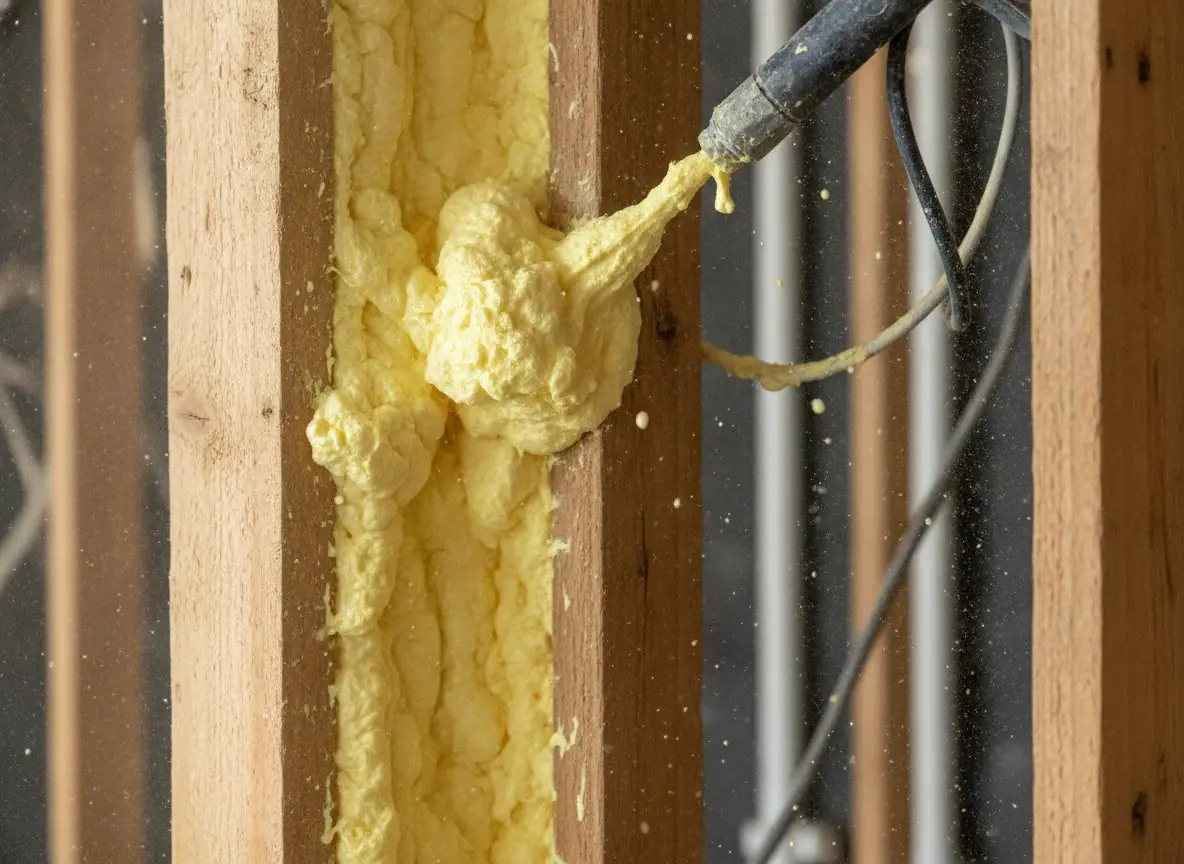
Closed cell spray foam insulation (ccSPF) is a two-component polyurethane material that, when mixed and applied by a trained technician, expands rapidly to fill cavities, cracks, and gaps before curing into a dense, rigid foam. The term “closed cell” refers to the microscopic cell structure of the cured foam — each tiny cell is completely enclosed, preventing air and moisture from passing through. This distinguishes it fundamentally from open cell spray foam, which has a softer, sponge-like structure and a lower R-value of around 3.5 per inch.
The use of spray foam insulation dates back to the 1940s, when polyurethane chemistry was first developed for industrial applications. By the 1970s energy crisis, spray foam began appearing in residential construction as homeowners and builders searched for more efficient alternatives to fiberglass. Today, closed cell spray foam is specified in demanding applications ranging from hurricane-prone coastal buildings to commercial cold-storage facilities, precisely because of its exceptional combination of thermal resistance, moisture control, and structural reinforcement.
Read moreShow less
In Southern California and specifically in Montebello, the prevalence of post-World War II housing stock is a critical contextual factor. The city saw rapid residential development between 1945 and 1965, and thousands of those homes were built with minimal insulation by today’s standards — often just a single layer of fiberglass batt in the attic and nothing in the exterior wall cavities. As these homes age, gaps in the building envelope widen, HVAC systems struggle to maintain comfortable temperatures, and energy bills climb year after year.
Closed cell spray foam is particularly well-suited to Montebello’s building landscape for several reasons. It can be applied to existing wall cavities through small drill holes during a retrofit installation, making it ideal for the city’s aging bungalows, ranch-style homes, and multi-unit apartment buildings built on slab-on-grade and raised foundation configurations. Its vapor-retarding properties also address the moisture intrusion challenges common in Montebello’s semi-arid climate, where occasional heavy rainstorms — often associated with El Niño cycles — can drive moisture into building assemblies not designed for wet conditions.
Beyond residential use, closed cell spray foam is increasingly specified for Montebello’s light industrial and warehouse properties along the Garfield Avenue and Washington Boulevard commercial corridors, where energy-intensive HVAC systems can be significantly downsized when the building envelope is properly sealed and insulated.
Why Closed Cell Spray Foam Insulation Is Needed in Montebello, CA
Montebello’s Climate and Thermal Demands
Montebello sits in the eastern San Gabriel Valley at an elevation of roughly 290 feet above sea level. The city experiences a classic Southern California semi-arid climate classified as BSk (semi-arid, cold) transitioning to a Csa (Mediterranean) climate. Summer highs regularly reach 95°F to 100°F between July and September, and the urban heat island effect — intensified by Montebello’s dense residential and commercial development — can push localized temperatures even higher. Meanwhile, winter overnight lows can dip to 35°F to 38°F, particularly in the Montebello Hills neighborhoods elevated above the valley floor, creating meaningful heating loads as well.
This temperature swing of 60°F or more throughout the year places heavy demands on HVAC systems. Homes and buildings without adequate insulation and air sealing see cooling and heating costs that are 30% to 50% higher than properly insulated structures. Closed cell spray foam’s R-6.5 per inch rating and near-zero air permeance make it the most direct solution to this challenge.
Aging Housing Stock and Building Envelope Failures
A significant portion of Montebello’s approximately 24,000 housing units were constructed during the post-war suburban expansion of the late 1940s through the 1960s. Neighborhoods like Bella Vista, Montebello Hills, and the blocks surrounding Montebello Park were developed in this era using construction techniques that prioritized speed and affordability over long-term energy performance. Many of these homes have 2×4 framed exterior walls with shallow cavity depths that limit the R-value achievable with batts alone. Closed cell spray foam, applied at 2 inches in a 3.5-inch cavity, delivers R-13 before any additional insulation is layered on top.
Furthermore, decades of seismic activity — including the 1987 Whittier Narrows earthquake (magnitude 5.9), which caused widespread structural damage throughout the San Gabriel Valley region including Montebello — has left many older buildings with hairline cracks in framing, foundation gaps, and shifted building assemblies that allow significant air infiltration. Closed cell spray foam adheres directly to substrates and expands to fill these irregular gaps, something fiberglass and cellulose simply cannot replicate.
Soil Conditions and Moisture Movement
Montebello is situated on alluvial soils deposited by the San Gabriel River system. These expansive clay-bearing soils can shift seasonally as they absorb and release moisture, creating foundation movement that opens gaps in the building envelope over time. Crawl spaces in the older raised-foundation homes common along Montebello Boulevard and Whittier Boulevard corridors are particularly vulnerable to moisture intrusion and soil vapor, both of which are effectively blocked by closed cell spray foam’s closed-cell structure and Class II vapor retarder properties.
Energy Code Compliance Pressures
California’s Title 24 energy code has become progressively more stringent, with the 2022 code cycle requiring significantly higher whole-wall R-values and air leakage controls than previous iterations. For Montebello property owners undertaking renovations, additions, or sales requiring energy compliance documentation, closed cell spray foam is often the most practical path to meeting these requirements within existing framing depths.
Free, no-obligation estimates
Talk to Armour Montebello Insulation
Tell us what you need and we’ll take it from there.
Signs You Need Closed Cell Spray Foam Insulation in Montebello
Energy and Comfort Signals
- Monthly electric bills exceeding $200 to $300 during Montebello’s July–September heat season for a standard single-family home
- Rooms that are noticeably hotter or cooler than the thermostat setting, particularly south- and west-facing rooms that absorb afternoon sun
- HVAC system running almost continuously during summer without achieving the set temperature
- Drafts near electrical outlets, window frames, or along baseboards even when windows are closed
Moisture and Structural Warning Signs
- Visible condensation on interior walls or ceilings during Montebello’s occasional winter rain events
- Musty odors in crawl spaces, attics, or lower floor rooms — particularly after El Niño-driven rain seasons
- Staining or efflorescence on foundation walls indicating moisture migration through concrete
- Pest intrusion through gaps in the building envelope, including ants, roaches, or rodents entering through wall penetrations
Building Age Indicators
- Home or building constructed before 1978 with no documented insulation upgrades
- Attic insulation depth below 10 inches (indicating R-30 or less, below current Title 24 minimums for Montebello’s climate zone 9)
- Crawl space with exposed soil and no vapor barrier or insulation on floor joists
Urgency Indicators
If you are experiencing moisture intrusion in combination with high energy bills, this is a high-priority situation. Unchecked moisture in wall and floor cavities leads to mold growth within 24–48 hours of saturation and can cause rapid deterioration of framing lumber. Contact Armour Montebello Insulation at (323) 741-5848 immediately for an assessment.
Our process
Our Closed Cell Spray Foam Insulation Process in Montebello
Armour Montebello Insulation follows a structured, multi-step process designed to ensure every installation meets the highest standards of performance and safety. Here’s what you can expect from start to finish:
- 01
Initial Assessment and Blower Door Testing (Day 1 — 1 to 2 hours)
Our technicians begin with a thorough walkthrough of your Montebello property, examining attic conditions, crawl space access, wall assemblies, and any existing insulation. Where appropriate, we use a blower door test to quantify air leakage in ACH50 (air chan
- 02
Preparation and Masking (Day 1 — 2 to 4 hours)
All surfaces not receiving foam — electrical fixtures, HVAC equipment, windows, and finished surfaces — are carefully masked and protected. In Montebello’s older homes, this often includes protecting original hardwood floors and period fixtures. Ventilation is
- 03
Removal of Existing Compromised Insulation (Day 1 — variable)
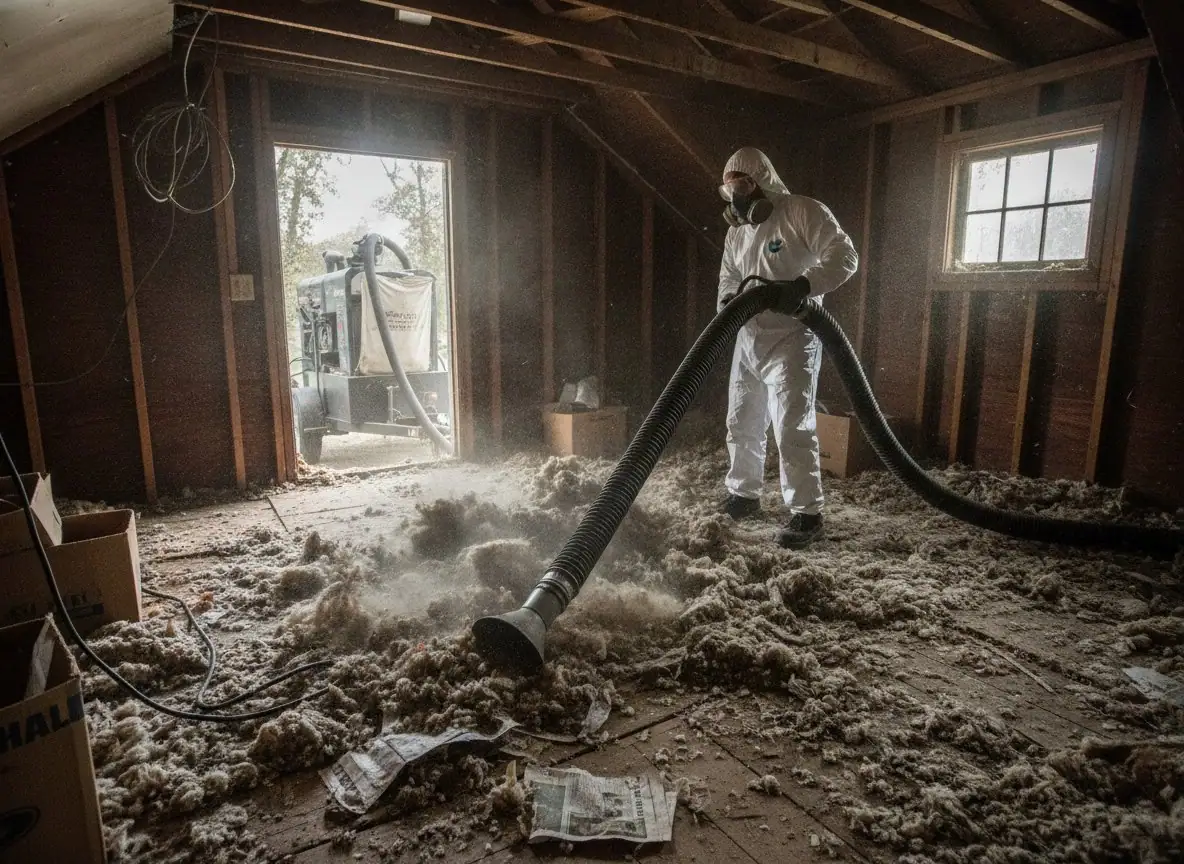
If existing fiberglass batts or blown-in insulation is contaminated, compressed, or moisture-damaged, it is removed prior to foam application. Learn more about our insulation removal services for details on this process.
- 04
Closed Cell Spray Foam Application (Day 1 to Day 2 — 4 to 8 hours)
Using calibrated two-component proportioners, our certified technicians apply closed cell spray foam in lifts of 1 to 2 inches, allowing each lift to fully expand and begin curing before the next is applied. This prevents overheating during the exothermic curi
- 05
Cure Time and Re-entry (Day 2)
Closed cell spray foam typically reaches full cure within 24 hours. Occupants may re-enter treated areas after a minimum of 24 hours and thorough ventilation. Our team provides written re-entry guidelines in compliance with California Air Resources Board (CARB
- 06
Inspection and Testing (Day 2 — 1 to 2 hours)
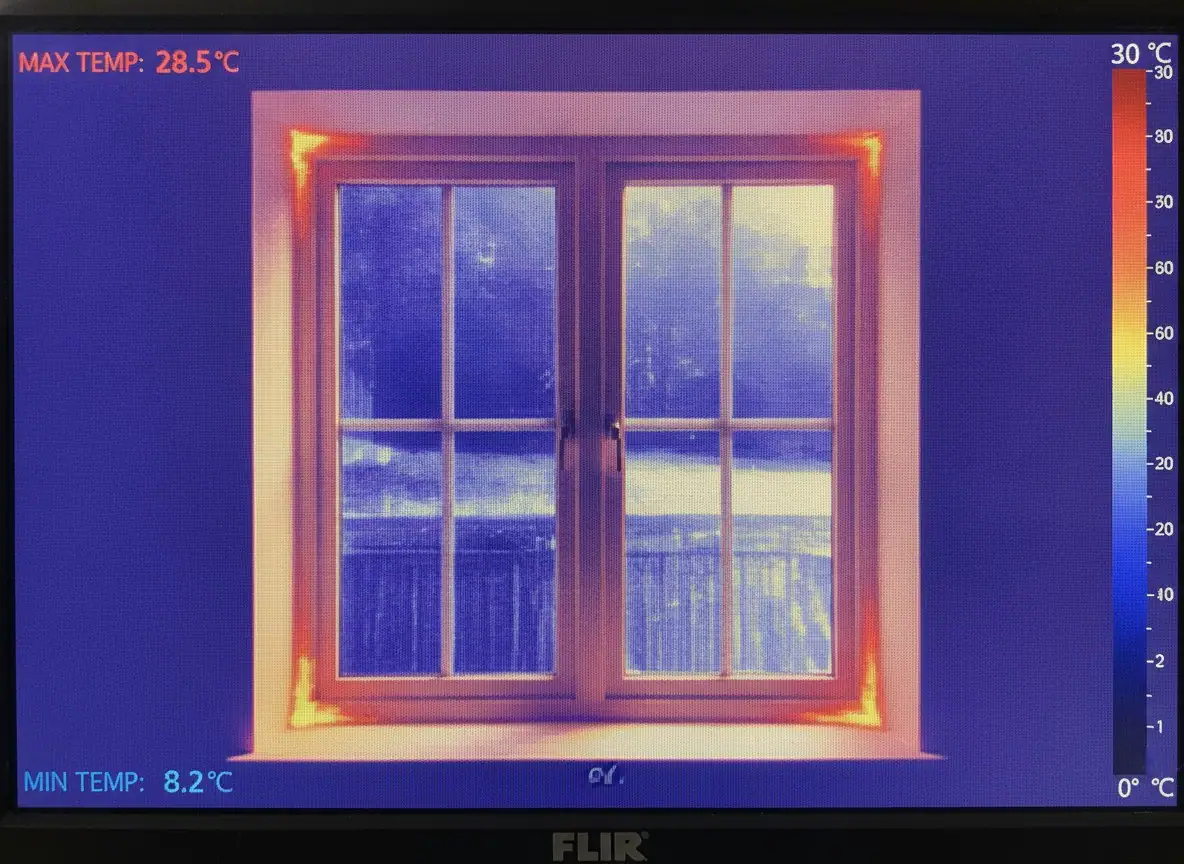
Post-installation blower door testing confirms achieved air leakage reduction. Foam surfaces are visually inspected for voids, and thermal imaging confirms coverage uniformity.
- 07
Documentation and Compliance Review (Day 2)
We provide complete installation documentation including product data sheets, applied thicknesses, and R-value certifications suitable for Title 24 compliance records, HOA requirements, or real estate disclosures.
Closed Cell Spray Foam Methods and Approaches
1. Unvented (Hot Roof) Attic Assembly
Applied directly to the underside of the roof deck, this approach converts the attic into conditioned or semi-conditioned space and is ideal for Montebello’s many homes with HVAC equipment and ductwork in the attic. By bringing ducts inside the thermal envelope, duct losses — which can account for 20% to 30% of cooling energy in standard vented attics — are virtually eliminated. Typically 3 to 4 inches of closed cell foam is applied to the roof deck and gable walls.
2. Exterior Wall Retrofit (Drill-and-Fill)
For Montebello’s existing homes where opening walls is not practical, small holes are drilled through exterior siding or interior drywall, closed cell foam is injected to fill the wall cavity, and holes are patched. This method is particularly effective in the 2×4 stud walls of mid-century homes in the Bella Vista and central Montebello neighborhoods.
3. Crawl Space Encapsulation with Closed Cell Foam
Closed cell foam is applied to crawl space walls and rim joists, creating a sealed, conditioned crawl space that controls soil moisture vapor and eliminates the cold floor syndrome common in Montebello’s raised-foundation homes during winter months. Learn more about our crawl space encapsulation services.
Learn more4. Hybrid Insulation Systems (Closed Cell + Blown-In)
For cost-sensitive projects or where full closed cell fill is not required, we apply 1 to 2 inches of closed cell foam as the air and vapor barrier, then complete the cavity with blown-in cellulose or fiberglass. This hybrid approach is common in Montebello’s mid-size commercial buildings and delivers excellent performance at a lower cost than full closed cell fill. Explore our blown-in insulation options.
5. Commercial and Industrial Applications
For light industrial facilities along Montebello’s Garfield Avenue corridor, closed cell foam is applied to metal building roof decks and wall panels, where its adhesion to metal substrates and moisture resistance are particularly valuable.
Closed Cell Spray Foam Insulation Cost in Montebello, CA
Understanding the investment required for closed cell spray foam insulation in Montebello helps property owners plan appropriately and evaluate the long-term return on energy savings.
Typical Price Ranges
Closed cell spray foam insulation in Montebello generally ranges from $1.50 to $3.50 per board foot (one square foot applied at one inch thick), depending on application type, accessibility, and project scope. Common project costs include:
- Attic roof deck (hot roof) — average Montebello single-family home (1,200 to 1,800 sq ft attic): $4,500 to $9,500
- Exterior wall retrofit (drill-and-fill) — 3-bedroom home: $3,500 to $7,000
- Crawl space rim joist and wall application — standard raised foundation: $1,500 to $3,500
- Hybrid closed cell + blown-in attic system: $2,800 to $5,500
- Commercial warehouse roof deck (5,000 sq ft): $18,000 to $35,000
Read moreShow less
Factors Affecting Cost in Montebello
- Accessibility: Tight crawl spaces or attics with low clearance in Montebello’s older homes require additional labor time
- Existing insulation removal: If compromised insulation must be removed first, add $1,000 to $3,000 depending on volume
- Climate zone requirements: Montebello falls in California Climate Zone 9, which mandates minimum R-values that influence required foam thickness and total material cost
- Material costs: Polyurethane raw material prices fluctuate with petroleum markets; projects priced in advance of extended material cost increases may be subject to adjustment
ROI and Energy Savings
Montebello homeowners who have upgraded from no insulation to closed cell spray foam systems report electricity bill reductions of $100 to $250 per month during peak summer months, yielding payback periods of 5 to 8 years. California utility rebates through SCE (Southern California Edison) may further reduce net costs. Contact us at (323) 741-5848 for a detailed written estimate specific to your property.
Neighborhoods in Montebello We Serve
Montebello Hills
Elevated above the valley floor, Montebello Hills features custom and tract homes built primarily from the 1960s through 1980s. Greater temperature swings between day and night, combined with exposure to Santa Ana wind events, make air sealing with closed cell foam particularly valuable here. Many homes have vaulted ceilings and complex roof lines that benefit from unvented roof deck foam application.
Bella Vista / Central Montebello
The Bella Vista neighborhood and surrounding central Montebello blocks contain a high concentration of post-war bungalows and Spanish Colonial Revival cottages built between 1945 and 1960. These homes typically have shallow 2×4 wall cavities, minimal original insulation, and raised foundations — making them ideal candidates for wall cavity foam retrofit and crawl space encapsulation.
Montebello Park Area
Homes near Montebello Park tend to be slightly newer (1960s–1970s) and often have slab-on-grade foundations. Here, attic insulation upgrades using closed cell hot roof systems are the primary focus, along with air sealing of the many penetrations common in slab construction.
Garfield Avenue Commercial Corridor
Light industrial and commercial properties along Garfield Avenue present large-scale foam application opportunities, particularly for metal building roofs and tilt-up concrete wall panels where conventional insulation systems are impractical.
Maintenance Tips for Closed Cell Spray Foam Insulation in Montebello
Closed cell spray foam is one of the most durable insulation materials available, but maintaining the broader building envelope ensures your investment performs optimally over its lifetime. Here are key maintenance tips specific to Montebello conditions:
- Inspect foam surfaces annually: Look for any physical damage, particularly in crawl spaces where pest activity can sometimes gouge foam surfaces. Armour Montebello Insulation recommends a brief visual inspection each spring before summer heat season begins.
- Protect from UV exposure: Closed cell foam degrades when exposed to prolonged ultraviolet light. Any foam installed in areas with sunlight exposure (such as exterior foundation walls) must be covered with paint, stucco, or a code-approved thermal barrier within 30 days of installation.
- Monitor for pest entry points after seismic events: Given Montebello’s seismic history, inspect foam-sealed penetrations after any earthquake of magnitude 4.0 or greater for new gaps at foam-to-substrate interfaces.
- Maintain positive drainage around the foundation: Montebello’s clay-bearing soils can pond water against foundations during winter rain events. Ensure grading directs water away from the structure to protect foam-insulated crawl space assemblies.
- Service HVAC equipment annually: A sealed, foam-insulated building envelope is only as effective as the HVAC system that conditions the space. Annual tune-ups ensure efficiency gains from insulation are not offset by mechanical losses.
- Check attic ventilation transitions: If transitioning from a vented to an unvented attic assembly, ensure all former soffit and ridge vents are properly sealed to prevent bypassing the foam air barrier.
- Re-test air leakage every 5 to 7 years: A blower door test confirms that the building envelope remains tight and identifies any new penetrations that may have been created during renovations or repairs.
Why Choose Armour Montebello Insulation for Closed Cell Spray Foam
When it comes to closed cell spray foam insulation in Montebello, choosing a contractor with deep local knowledge and technical expertise makes a measurable difference in outcomes. Here’s why Montebello property owners trust Armour Montebello Insulation:
Local Expertise
Local ExpertiseWe know Montebello’s neighborhoods, building eras, soil conditions, and climate patterns intimately. From the raised-foundation bungalows of Bella Vista to the commercial warehouses along Garfield Avenue, we tailor every installation to the specific demands of your property and its location within Montebello.
Comprehensive Service Range
Comprehensive Service RangeBeyond closed cell spray foam, we offer full spray foam insulation services, attic insulation, blow-in insulation, crawl space insulation, crawl space encapsulation, insulation removal, and insulation replacement — making us a single-source provider for all your insulation needs.
Precision Application
Precision ApplicationOur technicians use calibrated proportioning equipment and follow manufacturer specifications precisely, ensuring consistent foam density, R-value, and adhesion across every project.
Transparent Pricing
Transparent PricingWe provide detailed written estimates with no hidden fees. You’ll know exactly what materials are being applied, at what thickness, and at what cost before any work begins.
Customer-First Approach
Customer-First ApproachWe treat every Montebello home and business as if it were our own. Call us at (323) 741-5848 to experience the Armour Montebello Insulation difference.
FAQ
Frequently Asked Questions About Closed Cell Spray Foam Insulation in Montebello
How much does closed cell spray foam insulation cost in Montebello, CA?
In Montebello, closed cell spray foam typically costs between $1.50 and $3.50 per board foot. For a standard single-family home attic application (unvented hot roof), expect to invest $4,500 to $9,500. Wall cavity retrofit projects for a 3-bedroom home generally range from $3,500 to $7,000. Factors including existing insulation removal needs, accessibility of spaces in older Montebello homes, and required foam thickness per California Climate Zone 9 code all influence final pricing. Contact us at (323) 741-5848 for a no-obligation estimate.
Is closed cell spray foam better than open cell foam for Montebello homes?
For most Montebello applications, yes. Closed cell foam’s higher R-value per inch (R-6.5 vs. R-3.5 for open cell), its moisture vapor retarder properties, and its ability to structurally reinforce framing make it superior in Montebello’s conditions — particularly in crawl spaces with soil moisture, attics exposed to extreme summer heat, and older wall assemblies with limited cavity depth. Open cell foam can be appropriate in specific interior applications where cost is the primary concern and moisture control is not critical.
How long does closed cell spray foam installation take in Montebello?
Most residential projects in Montebello are completed in one to two days. A standard attic application requires approximately 4 to 8 hours of spray time plus preparation and cure time. Larger or more complex projects — such as full-house wall cavity retrofits in a 1,800-square-foot Montebello Hills home — may require two full days. We schedule projects to minimize disruption and ensure occupants can safely return within 24 hours of application completion.
Will closed cell spray foam help with the Santa Ana wind drafts common in Montebello?
Absolutely. Santa Ana wind events create significant positive pressure on the windward side of Montebello homes, forcing outdoor air through every unsealed gap in the building envelope. Closed cell spray foam’s near-zero air permeance (0.02 perms at 2 inches) makes it the most effective solution available for eliminating wind-driven infiltration, reducing both energy loss and the dust and allergen intrusion that accompany Santa Ana conditions.
Does closed cell spray foam help with noise reduction in Montebello?
Closed cell foam provides modest sound attenuation (STC improvement of 3–5 points) compared to the more significant noise reduction of open cell foam. However, for Montebello properties near the 60 Freeway, Garfield Avenue commercial traffic, or the Montebello Town Center, closed cell foam’s superior air sealing substantially reduces the transmission of high-frequency traffic and commercial noise through gaps and penetrations in the building envelope, making it a meaningful contributor to indoor acoustic comfort.
Is closed cell spray foam safe for my family and pets during and after installation?
During application, closed cell spray foam releases isocyanate and amine compounds that require occupant evacuation and proper ventilation. Our team follows California OSHA and CARB guidelines strictly, including establishing mechanical ventilation during application and providing written re-entry protocols requiring a minimum of 24 hours before occupants — including pets — return. Once fully cured, closed cell spray foam is chemically inert and safe.
Can closed cell spray foam help me comply with California Title 24 in Montebello?
Yes. Montebello falls within California Climate Zone 9, which specifies minimum whole-wall R-values and air leakage rates under the 2022 Title 24 energy code. Closed cell spray foam’s high R-value per inch allows compliance even within the shallow 2×4 stud walls common in Montebello’s older homes, and its air sealing performance directly addresses the ACH50 requirements that standard batt insulation alone cannot meet.
Do you offer insulation removal before applying closed cell foam in Montebello?
Yes. If your existing insulation is moisture-damaged, pest-contaminated, or simply too degraded to leave in place, Armour Montebello Insulation provides complete insulation removal services prior to closed cell foam installation. This is common in Montebello’s older homes where original fiberglass batts have settled, been disturbed during renovations, or compromised by roof leaks or pest activity. We handle removal, disposal, and installation as a fully integrated service.
Get Your Free Closed Cell Spray Foam Estimate in Montebello Today
If your Montebello home or commercial property is losing energy, struggling with moisture, or simply failing to stay comfortable during Southern California’s demanding summers and cool winters, closed cell spray foam insulation from Armour Montebello Insulation is the solution you need. Our team is ready to assess your property, recommend the right application approach, and provide a transparent, detailed estimate at no cost to you.
Don’t let another brutal Montebello summer drive your energy bills sky-high. Take action now and invest in a building envelope that performs for decades.
Call Armour Montebello Insulation today at (323) 741-5848 to schedule your free on-site assessment. We serve all neighborhoods throughout Montebello, CA, and are ready to help you achieve the comfort and energy efficiency your property deserves.
Get in touch
Find insulation help near you
Request a free estimate online or give us a call — our team will follow up quickly.
- Call us(323) 741-5848
- Visit1125 S Maple Ave, Montebello, CA 90640
- HoursMon-Sun 07:00-19:00